Blog
What Age Can a Kid Start Riding a Gas-Powered Mini Bike?

By FE-Motorsport | Kids’ Powersports | Parent Guides
It’s one of the most common questions we hear from parents at FE-Motorsport: “My kid wants a mini bike but are they old enough?”
The honest answer is that age is just one part of the equation. Readiness for a gas-powered mini bike depends on a combination of age, physical size, emotional maturity, and the level of parental supervision available. A confident, coordinated 5-year-old might be more ready than a timid 8-year-old and vice versa.
This guide walks through everything you need to consider before putting your child on a gas-powered machine.
The Age Question: What the Industry Recommends
Most manufacturers of 49cc and 50cc entry-level gas mini bikes including the Mini Banshee recommend them for children aged 4 and up, with supervision. Here’s a general age breakdown used across the youth powersports industry:
| Age | Recommended Machine | Notes |
|---|---|---|
| 3–4 years | Electric ride-on or balance bike | Building coordination, no gas yet |
| 4–6 years | 49cc gas mini bike (supervised) | Low speed, auto clutch, parent present always |
| 6–9 years | 49cc–70cc mini bike or ATV | Growing confidence, longer sessions |
| 9–12 years | 70cc–110cc dirt bike or ATV | Developing real technique |
| 12+ years | 110cc–125cc and up | Progressing toward full-size machines |
These are guidelines, not rules. Use them as a starting framework, then adjust based on your individual child.
Age Is Only Part of the Story: The 4 Readiness Factors
1. Physical Size
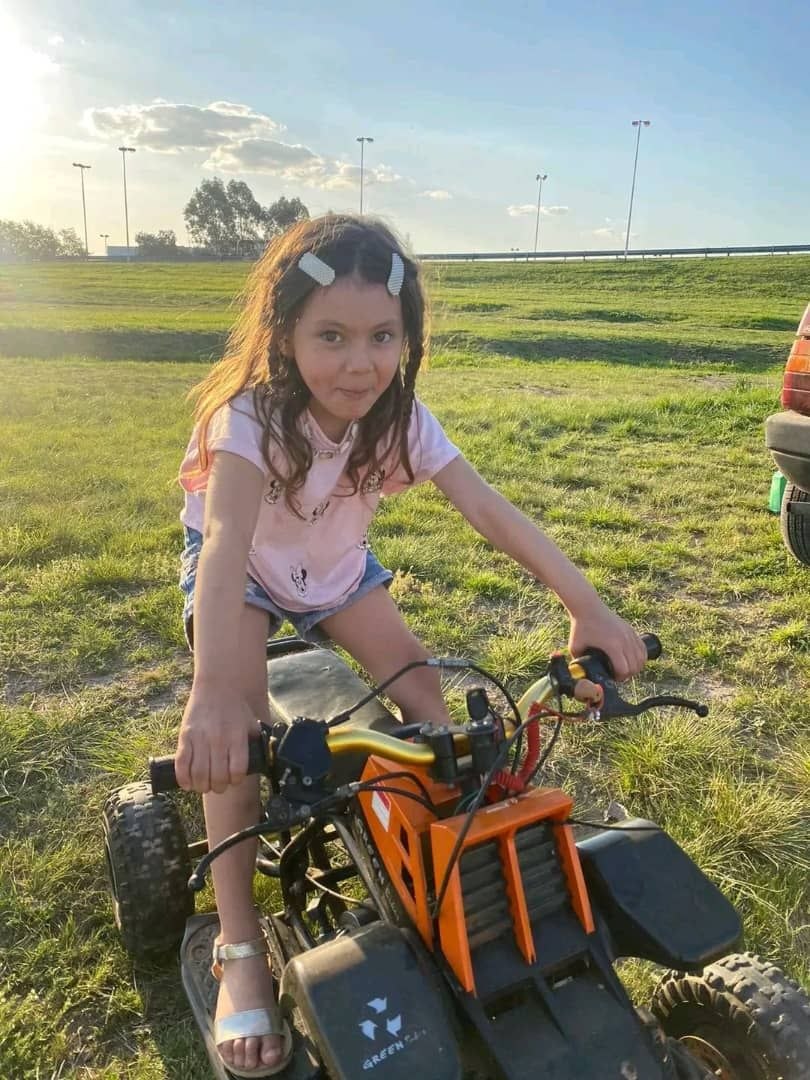
A child needs to be able to reach the ground with at least one foot when seated on the bike. If they’re perched on the seat with both feet dangling, they’ll struggle to recover from a balance wobble at low speed.
The 49cc Mini Banshee has a low seat height specifically designed for younger, smaller riders. If your child can comfortably reach the ground, they’re physically sized for the bike.
2. Hand Strength and Coordination
Can your child squeeze a handbrake lever with meaningful force? Can they hold the handlebars steady while twisting the throttle? Basic hand-eye coordination and grip strength are prerequisites for safe riding.
A simple test: have them squeeze a bicycle handbrake. If they can compress it fully with one hand, they likely have enough grip strength for a mini bike.
3. Ability to Follow Instructions
This is the one parents often overlook. A child who can’t or won’t follow directions reliably is not ready for a motorized machine regardless of age. Before their first ride, your child should be able to:
- Listen and respond to verbal instructions from a parent
- Stop what they’re doing immediately when told to
- Understand and remember simple rules (no gear = no ride, stop when I say stop)
If your child regularly ignores instructions or acts impulsively, give it a few more months before introducing a gas-powered bike.
4. Emotional Readiness
Some kids are fearless. Some are cautious. Both can ride but they need different approaches.
Fearless kids need clear boundary-setting and close supervision because their confidence can outpace their skill.
Cautious kids need patient encouragement and low-pressure introduction. Start with the engine off just let them sit on the bike, push it around, get comfortable before any riding happens.
Neither type is wrong. You just need to know which one you’re dealing with.
What About Very Young Riders (Under 4)?
For children under 4, gas-powered bikes are generally not appropriate. The coordination, attention span, and instruction-following ability needed for safe operation typically aren’t fully developed yet.
However, you can absolutely start building the foundation for riding at this age:
- Balance bikes develop the core balance instincts that transfer directly to two-wheeled riding
- Electric ride-on toys introduce the concept of throttle control at safe speeds
- Watching and learning let young children be present at riding sessions so they absorb the culture, the safety habits, and the excitement naturally
Many of the best young riders started on balance bikes at 2 years old and transitioned to a 49cc gas bike by their 4th or 5th birthday seamlessly.
Safety Gear Requirements by Age
No child regardless of age should ride without proper protective gear. Here’s what’s non-negotiable:
Every rider, every age:
- DOT-approved helmet (full-face motocross style recommended)
- Gloves
- Knee and shin guards
- Elbow pads
- Closed-toe boots (ideally riding-specific or at minimum sturdy sneakers)
Additional for younger riders (under 6):
- Consider a chest protector for extra protection
- Neck brace if available in child sizing
Gear should be replaced as your child grows a helmet that doesn’t fit properly provides minimal protection.
Signs Your Child Is NOT Ready Yet
Watch for these red flags before committing to a gas-powered bike:
- They become frustrated or panicked when they make mistakes
- They have difficulty understanding or accepting rules
- They’ve shown reckless behavior on bicycles, scooters, or other ride-ons
- Their feet don’t reach the ground when seated on the bike
- They’ve expressed fear about the engine noise or speed
None of these are permanent they’re just signals to wait a little longer and continue building readiness through non-motorized riding.
The First Ride: Setting Up for Success
When the day finally comes, set your child’s first gas-powered riding experience up properly:
Choose the right environment. Flat, open ground a lawn, a grassy field, an empty parking lot. No slopes, no obstacles, no distractions.
Start with the engine off. Let them sit on the bike, get a feel for the controls, and practice rolling without power first.
Walk before you run. First powered session = slow, straight lines only. No turning, no speed. Just getting used to the throttle response.
Keep sessions short. 15–20 minutes is plenty for a first ride. Fatigue leads to mistakes. End on a positive note and leave them wanting more.
Celebrate progress, not speed. The goal of early sessions is confidence, not performance.
Frequently Asked Questions
Q: Can a 4-year-old ride a 49cc mini Banshee? Yes, with supervision and if they meet the physical size requirements. The key is whether they can reach the ground comfortably and follow basic instructions reliably.
Q: What is the minimum height for a 49cc mini bike? There’s no universal rule, but a child should be able to place at least one foot flat on the ground when seated. This is more important than age alone.
Q: My 7-year-old is nervous about gas bikes should I start with electric? Electric bikes are a great confidence builder. If your child is hesitant, starting on an electric mini bike before transitioning to gas is a completely valid approach.
Q: Is there a maximum age for the Mini Banshee? The Mini Banshee is designed for kids up to about 10 years old, or roughly up to 90–100 lbs rider weight. Beyond that, a larger machine will provide a better riding experience.
Ready to Find the Right First Bike?
At FE-Motorsport, we stock options for every age and stage from 49cc mini bikes for the youngest riders to 125cc+ machines for older kids ready to level up.
👉 Shop Kids’ Mini Bikes & ATVs — All Ages
Not sure what’s right for your child? Call us we love helping families make this decision.
📞 (909)-342-5382 | 📧 support@femotorsport.com